
About This Project
In the context of the widely favored “open-space” office layout, there remains a necessity for pockets of privacy to support the daily operations of any business. In renovating this compact design office, where budget constraints were paramount, the pivotal organizational principle revolved around balancing private and public spaces.
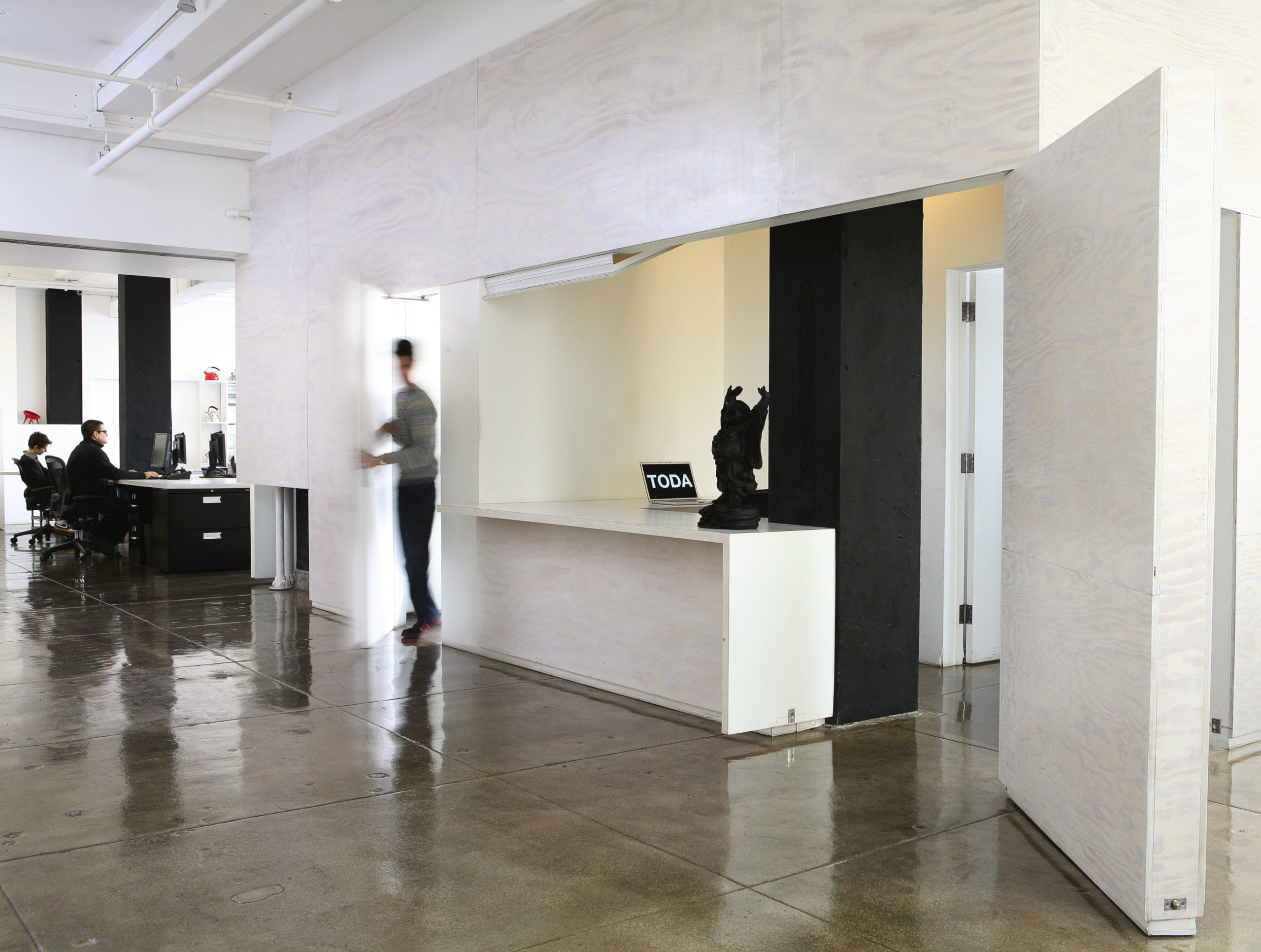
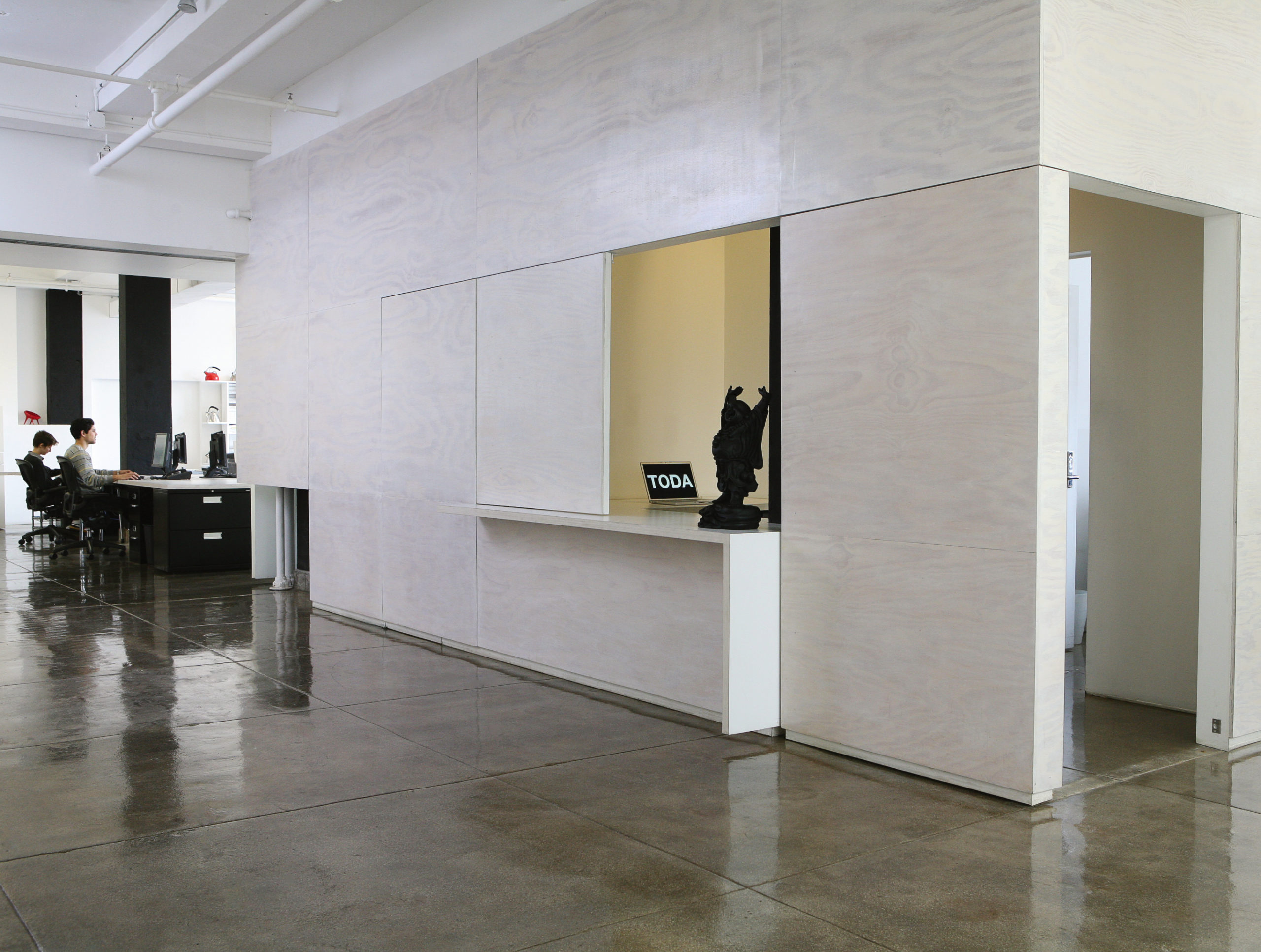
The program identified distinct private and semi-private areas strategically consolidated into a modular “box.” This box encompassed the reception desk, the office manager’s workspace, a shared room accommodating the two partners’ desks, and a small collaborative meeting lounge. The versatility of this “box” allowed it to adapt to varying degrees of privacy as needed. It could transition from a fully enclosed state to partial openness through a series of architectural features:
- A fold-up reception door offered the flexibility to create an open or closed reception area.
- The door adjacent to the public conference room featured three possible configurations: fully open to the main office, the reception side, or the conference room.
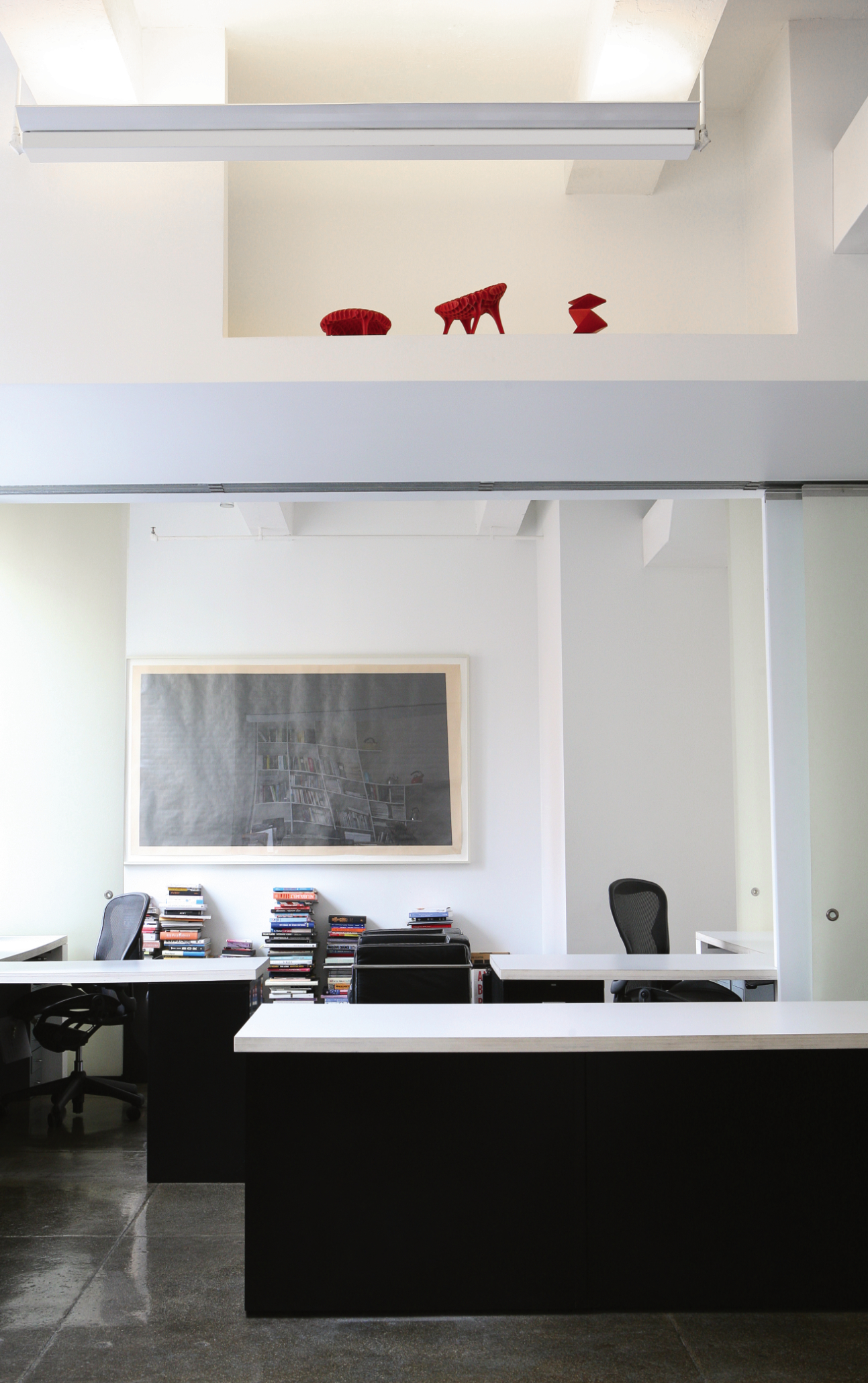
- Translucent panels may be drawn in the partner’s office, strategically open to the design studio, to enable discreet discussions.
The delineation of the “box” was subtly achieved through the choice of materials. Standard paint-grade plywood whitewashed to diminish its visual prominence covered the exterior.
By focusing the construction efforts primarily within the “box” structure, minimizing alterations to the remaining space, and employing a restrained architectural approach, we effectively met the client’s functional requirements while infusing the project with programmatic structural definition, all within the confines of a modest budget.